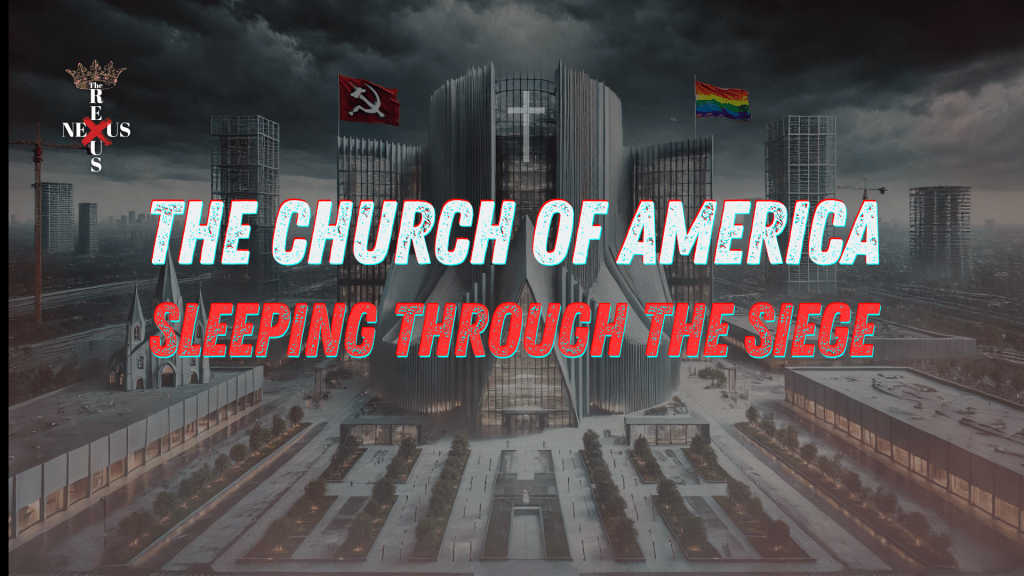
This blog continues our series with a raw, unfiltered look at the state of the Church of America. It’s a primer on my motivations for writing and a high-level overview of the issues shaping the Church’s current posture—and the resulting effects on our nation. This will hit you right between the eyes because it’s time for some hard truths...
The Legacy We’ve Neglected
The Church of America stands at a critical juncture, facing an existential threat from both within and without. We’ve been entrusted with the torch of liberty and righteousness—a legacy left to us by our nation’s founders who, despite their flaws, built this country on the foundation of God’s Word. But instead of carrying that torch forward, we’ve allowed it to flicker and fade. While we’ve been busy with our Sunday services and feel-good sermons, the enemy hasn’t just breached the gates—he’s set up shop in our living rooms.
This isn’t just a spiritual attack; it’s an all-out siege on our values, our beliefs, and our way of life. The Church of America, once a bastion of truth and courage, is now complacent, retreating from the very cultural battles we are called to fight. We’ve allowed secular ideologies like Marxism, Humanism, and Socialism to infiltrate our society and even our churches. These ideologies aren’t just political theories—they’re strategic weapons aimed directly at dismantling the Christian foundations of this nation. And what has been our response? We’ve folded. We’ve complied with worldly pressures, closed our doors out of fear, and failed to engage with the hostile narratives that dominate our society.
Throughout this blog, when we speak of the “Church of America,” we draw a parallel to how the Bible refers to the Body of Christ in specific locations like Ephesus, Corinth, and Laodicea. Associating a region’s name with the Body of Christ signifies our collective responsibility for that area’s welfare and highlights our stewardship over every pillar of societal influence where God’s People reside. This means taking accountability for the spiritual and moral direction of our nation, much like the early church did in its respective cities.
Throughout history, leaders such as Moses, Joshua, and David were charged with guiding their people according to God’s will. Today, titles like Supreme Allied Commander or Governor carry the same weight of duty, emphasizing the need to serve, protect, and lead with integrity. These titles, whether ancient or modern, signify that leaders are entrusted with the care and guidance of others. Like Moses, Joshua, and David, we as God’s People are modern-day leaders tasked with stewardship over our communities. Authority is not just about power; it is about influence, service, and accountability.
The Unseen Battle: My Personal Journey into Spiritual Warfare
But this failure isn’t just institutional—it’s deeply personal. My journey into understanding and engaging in Spiritual Warfare began with the most devastating loss of my life—the death of my oldest daughter, Elizabeth. Her laughter, her vibrant spirit, gone in an instant. In 2015, she took her own life, and finding her lifeless body is a memory that still haunts me. The shock, the grief—it was a gut punch that shattered my world. But it did more than that—it opened my eyes to the unseen battles that rage around us, battles that influence our lives in ways we’re often too blind to see.
Losing Elizabeth was my wake-up call, much like 2020 should have been for the Church. Her death forced me to confront the harsh reality that the most critical battles are fought in the mind and spirit. As I navigated my grief, I leaned on my military training—years of learning how to engage strategically, how to anticipate the enemy’s moves. This understanding became my lifeline, driving me to explore the strategies needed to engage in Spiritual Warfare effectively.
In my military career, particularly during my studies at the Joint Forces Staff College, I encountered the concept of warfare domains: the Physical, Information, and Cognitive Domains. When I reached the Cognitive Domain, I had an epiphany—it is the domain of the highest order, for out of it flows every value, belief, attitude, and behavior. This realization held me spellbound. The Scriptures flooded in, emphasizing the mind’s primacy; the mind’s output—good or evil—manifests into our physical reality. From individual patterns to societal systems, all starts in the mind—the Cognitive Domain. It truly is the definition of mind over matter—for out of the mind comes all human matters.
This understanding deepened during my final military assignment, where I specialized in wielding Informational Power. Information is the fundamental element of influence over our Cognitive Domain. It forms the building blocks of the values, beliefs, and attitudes manifesting through our behaviors. During this assignment, I learned how Informational Power is used in Information Warfare. It is the strategic use of information to influence perceptions and shape narratives. Partnered with this are Psychological Warfare and Influence Operations—strategies targeting the mind to influence perspectives.
The Misunderstanding of “Separation of Church and State”
Let’s dive right in and clear up one of the biggest lies that’s been sold to the American Church: the so-called “separation of church and state.” The truth is, most Christians in America don’t even know what this phrase really means because they don’t know the history of the nation they’ve been entrusted to steward.
The phrase “separation of church and state” wasn’t meant to muzzle the Church or keep Christians out of politics. It was intended to prevent the government from establishing a national religion while protecting the Church from governmental interference. But over time, it’s been twisted to suggest that Christians should sit down, shut up, and stay out of public life—a complete distortion of the truth.
This misinterpretation has led many pastors to dodge political issues, hiding behind the tired cliché of “we’re not a Democrat church or a Republican church, we’re a Jesus church.” Sounds nice, right? Wrong. It’s a lukewarm, intellectually dishonest cop-out designed to avoid controversy and appease everyone. Sure, there’s only one Church, the Body of Christ, Emissaries for The Kingdom of God; but this same Kingdom has laws, precepts, and mandates that we’re called to uphold as His ambassadors and executive agents here on earth and in the places He’s entrusted to us.
Look, here are the facts: in the United States, we operate within a two-party political system, and those parties have distinct values and ideologies. Recent history has made it very clear that one party aligns more closely with the principles of the Kingdom of Heaven than the other. Yet pastors keep clinging to this “Jesus church” line without ever backing it up with the hard truth that the Church has a mandate to engage with the world and shape it according to God’s principles.
It’s time to stop hiding behind feel-good phrases and start leading. Pastors need to educate their congregations on the importance of political literacy and cultural engagement. This isn’t about blindly endorsing a political party; it’s about endorsing those positions and policies which align with our King, and recognizing that the Church can’t afford to be neutral in a world where the battle lines are clear. We’ve got a duty to be the moral and spiritual leaders of this nation, guiding Believers to engage thoughtfully and strategically with the world around them.
Christians are called to lead, not just in the four walls of the local fellowship, but in public office too. We’re supposed to vote for candidates whose policies align with a Whole-of-Kingdom agenda—justice, security, prosperity, righteousness, and the sanctity of life. Political engagement isn’t optional; it’s our responsibility. We’re here to be salt and light in every sphere of society, influencing government, culture, and public discourse with the truth of God’s Word.
By reclaiming the true meaning of “separation of church and state,” Christians can re-engage with the culture and make sure the values of the Kingdom of Heaven are represented in every area of public life.
The Mega-Church Movement and Televangelism: The Church’s Strategic Retreat
It’s time to face the music: the megachurch movement and televangelism have done more harm than good in many ways. Sure, they’ve made Christianity a household name, but they’ve also turned faith into a product—a commodity that’s marketed with the same slick tactics you’d expect from a big-name brand. What’s the result? A Church that’s lost its edge, its power, and its purpose.
Let’s get real. Megachurches have become the poster children for feel-good Christianity. With their massive congregations, high-tech productions, and celebrity pastors, these churches have prioritized numbers over nourishment. The sermons are designed to entertain, to keep the audience happy and coming back for more, rather than to challenge and convict. It’s all about filling seats, not souls. The result? A culture of superficial Christianity where the message is watered down to appeal to the masses. Prosperity, success, personal fulfillment—that’s the new gospel. Sacrifice, service, and the tough truths of discipleship? They’ve been conveniently edited out.
But it’s not just the megachurches. Televangelism has taken this shallow approach to a whole new level. Faith has become a spectacle—a show that’s more about miracles, wealth, and the supernatural than about genuine spiritual growth. It’s created a generation of believers who are more interested in what they can get from God than in how they can grow in their relationship with Him. And let’s be honest, this spectacle-driven approach has made the Church a laughingstock in the eyes of the secular world. They see the hypocrisy, the exploitation, and they’re not wrong.
Now let’s talk about what’s happening every Sunday in local fellowships across this nation. Walk into any church, and it feels like you’re stepping into a TED Talk. Pastors are dishing out lightweight, life-coach sermons, desperately trying to craft the next viral soundbite. It’s like someone threw a bunch of fortune cookie affirmations into a blender, and out came the sermon. The entertainment-drunk audience claps and shouts “Amen!” like they’ve just heard some profound, long-hidden secret of the universe. Don’t believe me? Just tune into any online service this Sunday, then do it again the next week, and the next. It’s the same lukewarm Mr. Rogers message every time.
These sermons are carefully designed to avoid controversy, to sidestep the deep, challenging issues. Pastors are skating along the surface, only touching on the “safe” aspects of the Bible—self-esteem, being a good person, believing for healing, trusting for finances, discovering your “purpose.” But where’s the talk about repentance? Where’s the discussion about the real challenges facing the Church of America? Where’s the call to action about our role in stewarding this nation?
The truth is, pastors are feeding their congregations warm milk, and it’s no wonder so many American Christians are malnourished and misinformed. The Bible talks about the “milk of the word” for new believers, but there comes a time when we’re supposed to move on to solid food, to dig into the deeper truths of the faith (Hebrews 5:12-14). But instead, we’ve got churches full of believers who’ve been on the bottle for years, never growing, never maturing because their pastors are too scared to give them anything more.
This is the strategic retreat of the Church—a retreat into comfort, into entertainment, into the safety of non-offensive sermons that tickle ears but do nothing to transform lives. And while the Church has been playing it safe, the culture has been moving full speed ahead, filling the void with its own values and beliefs. The Church was never meant to be a feel-good factory. It was meant to be a place of truth, conviction, and transformation. But that requires pastors who are willing to speak the hard truths, to challenge their congregations, and to lead them into the deeper waters of faith.
It’s time to wake up. The Church can’t afford to keep retreating. We need to reclaim the ground we’ve lost, to stop serving up warm milk and start feeding the flock with the solid food of the Word. The future of the Church—and the nation—depends on it.
The Consequences of Complacency: The Church’s Role in a Cosmic Battle
Let’s get straight to the point: the Church of America’s complacency has devastating consequences. The Church, which should be the moral and spiritual compass of our nation, has become a passive observer, allowing secular narratives to take control. This isn’t just a cultural loss; this is a cosmic battle with eternal stakes—the souls of men and women and the moral fabric of society are on the line. It is a full scale, broad spectrum war being waged across every tier of culture and society.
This cosmic battle is a cross-dimensional conflict that transcends space and time as we perceive it or as modern science can fully explain. Yet somehow, the human race has been thrust into the center of this conflict. The human mind is the primary battlefield, and the human heart is the ultimate prize. Spiritual Warfare isn’t just about personal struggles with sin; it’s about engaging in this vast, ongoing battle between good and evil that’s raging in realms beyond our comprehension.
The information and narratives that shape our thoughts and beliefs in this world are the weapons of this war. These narratives will ultimately determine our actions and the kind of society we create. The enemy knows this all too well and has expertly weaponized the key terrains of media, entertainment, education, and politics to push an agenda that opposes everything the Kingdom of Heaven stands for. Meanwhile, the Church has stepped back—too apathetic to own the key terrains, too afraid to speak out, or too distracted to engage. We’ve forgotten that we’re in a war that transcends our immediate reality and has eternal consequences.
Ephesians 6:12 tells us our struggle is not against flesh and blood, but against spiritual forces of evil in the heavenly realms. Like I said, this is a cosmic conflict, and the Church is supposed to be on the front lines which is in every tier of our society—from the living room to the classroom, and from the boardroom to the courtroom. But instead of standing firm, too many have laid down their weapons, leaving the battlefield to the enemy.
It’s time for the Church to wake up. The battle for the mind is real, it’s being waged across the culture, and losing it means losing souls and the moral integrity of our nation. We must reclaim our role as the leading voice in this fight, using the truth of God’s Word to shape the narratives that guide our society. The stakes are too high for us to remain silent or complacent.
Reclaiming the Church’s Role: A Call to Spiritual Arms
The time for complacency is over. The enemy is not at the gates—he’s already inside, and he’s been busy. It’s time for the Church of America to wake up, stand up, and fight back. This is our call to action. We are the hands and feet of Christ, tasked with transforming hearts and minds in our communities and our country. The mission is clear: reclaim the narrative, engage in the battle for the mind, and turn the tide before it’s too late.
This journey through the challenges facing the Church of America will be raw, rough, and at times deeply uncomfortable. It will force us to confront painful truths and examine the ways we’ve strayed from our mission. There will be some bruised egos and hurt feelings along the way—but that’s okay. Growth often comes through discomfort, and sometimes we need to feel the sting of conviction to be moved toward true repentance and renewal. But I want to assure you that this journey is not just about exposing the cracks in our foundation; it’s about rebuilding and fortifying it. Along the way, I will provide practical, actionable steps that we can take together to reclaim our role as Heaven’s executive agents who help actualize how our Lord taught us to pray “…Your Kingdom come, Your will be done on earth as it is in Heaven…”
I believe in the Church—not as a mere institution, but as the living, breathing Body of Christ, called to be a beacon of truth, love, and righteousness in a darkening world. Despite the challenges we face, we must remember the words of Jesus: “I will build my church, and the gates of hell shall not prevail against it.” This is our hope and our confidence. The Church is not defeated nor ever will be, and we are not alone in this battle. The same power that raised Christ from the dead is at work in us, empowering us to stand firm and push back against the forces of darkness.
As we embark on this journey, let us do so with the unwavering belief that the Church is destined to overcome—not by our strength, but by the Spirit of God within us. Together, we can turn the tide, reclaim the ground we’ve lost, and ensure that the light of Christ shines brightly in every corner of our nation. The battle is far from over, but with faith, courage, and a renewed commitment to our divine calling, we will prevail.
About the Author:
Matthew Mattera is a retired naval officer with specialized expertise in advanced communication systems and information warfare, where he offered strategic advisement to the highest echelons of military leadership, shaping pivotal policies and strategies. With a profound understanding of both the physical and spiritual dimensions of warfare, Matthew has faced and overcome significant personal adversity, including the heart-wrenching losses of six family members to suicide and self-harm, including his father and oldest daughter.
As a published author and public speaker, he adeptly merges his extensive professional background with his deeply personal experiences to bridge the often-overlooked gap between Information Warfare and Spiritual Warfare. Deeply passionate about his nation which he served and the Church’s critical role as stewards and influencers, Matthew is dedicated to guiding The Church in reclaiming its foundational role in shaping society.
By leveraging his in-depth knowledge of cognitive influence impacts from his military career, he highlights how the strategies and tactics used in information warfare can directly inform and parallel those in spiritual battles, particularly in influencing thoughts, beliefs,perceptions – individually and across cultures at a profound level. His mission is to equip and empower God’s people to effectively counter ideological threats and enhance cultural influence. To explore this transformative approach to spiritual warfare and for opportunities to collaborate, you can contact Matthew at matthew@therexusnexus.com.
 The Rexus Nexus
Leave a comment