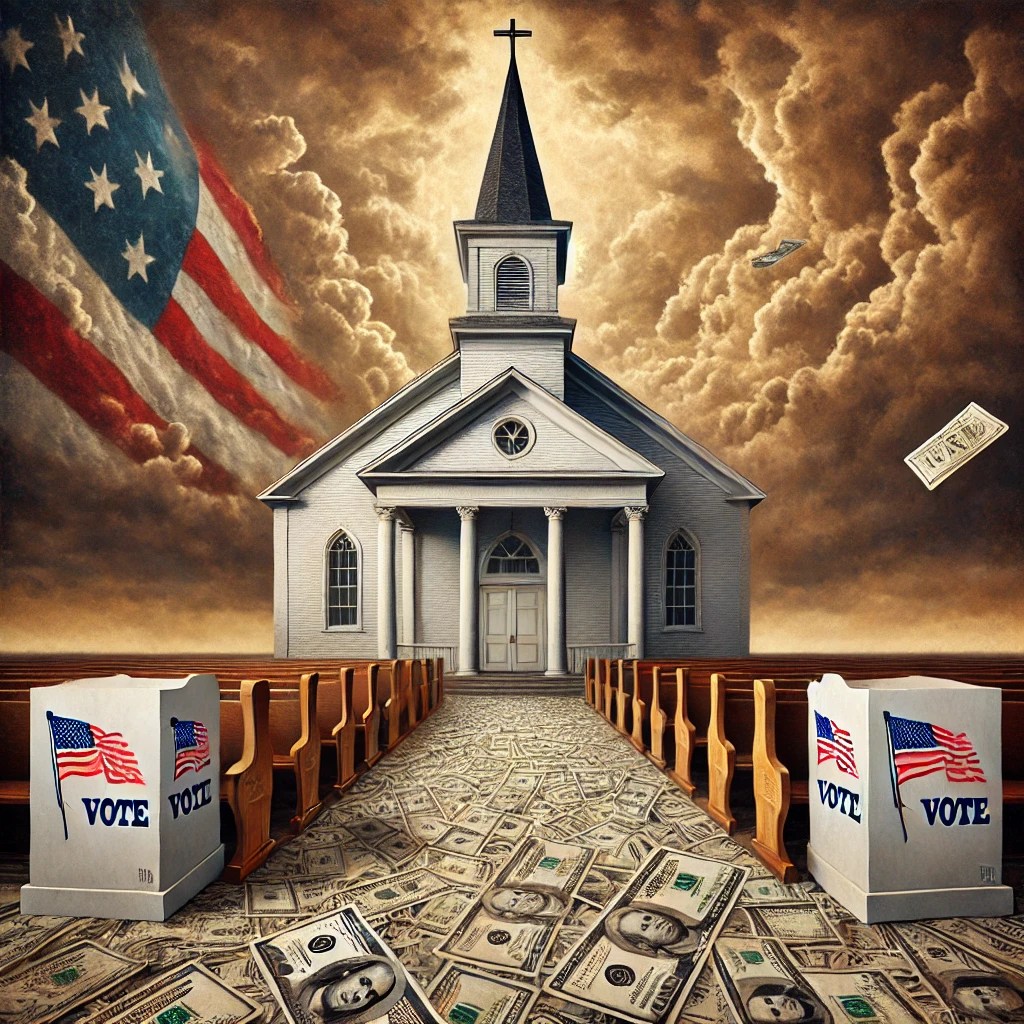
Introduction: Let me be blunt—votes have consequences. This isn’t just a catchy phrase; it’s the hard truth. The recent analysis by The Dispatch comparing the economic records of Donald Trump and Joe Biden doesn’t just highlight policy differences—it exposes a deeper spiritual and moral divide within our nation. If you’re a Christian and still undecided or unsure of who to vote for, let me tell you something: that’s not just ignorance—it’s a failure of leadership in our churches.
Pastors, I’m talking directly to you. Too much time has been spent preaching about tithes and offerings, with promises of financial blessings if your congregants give generously. Every Sunday across America, we hear the same pep talk before the offering plate is passed around. Heck, we’ve even got “ways to give” online to make sure the coffers are full. But where’s the teaching on the broader financial impacts of national policies? Where’s the guidance on how our votes influence the economy and how that, in turn, affects every family sitting in your pews? It’s time we got smarter because right now, the Church of America is dangerously uninformed.
The Church’s Retreat and Its Consequences
Let’s not sugarcoat it—the Church has retreated from its role as a leader in society, especially in areas like economics and politics. Many pastors are too afraid to tackle these tough topics, preferring to avoid controversy and stick to safer subjects like personal financial blessings. But the world outside the church doors is in chaos, and ignoring these issues isn’t just negligence—it’s dereliction of duty.
There are countless books, articles, and resources in Christian bookstores and on church bookshelves that speak endlessly on tithing. And look, there’s nothing inherently wrong with focusing on tithing, but let’s get real—it’s only part of the picture. The Church has placed so much emphasis on filling the coffers of the local fellowship, but where’s the conversation about the bigger picture? Where’s the discussion about the larger aspects of economics? Because make no mistake—economics is a line of effort in warfare, especially in broad-spectrum, strategic-level warfare like Spiritual Warfare.
In military strategy, we talk about DIME—Diplomacy, Information, Military, and Economics—as the four elements of national power. Here’s the thing: the Church might not be out there engaging in conventional military operations, but don’t kid yourself—it’s been called to wage war at the highest level. I’m talking about warfare that starts in the Spiritual Realm and moves downward into and across the Physical Realm. This is a cosmic conflict, folks, and the battlefield extends far beyond the walls of the local fellowship building and Sunday sermons. Ephesians 6:12 spells it out: “For our struggle is not against flesh and blood, but against the rulers, against the authorities, against the powers of this dark world and against the spiritual forces of evil in the heavenly realms.” The Church has to wake up and realize it’s in a war that demands more than just spiritual fervor—it requires strategic wisdom and a deep understanding of the disciplines needed to wage this warfare effectively.
Let’s talk about the “E” in DIME—Economics. This isn’t just some academic concept; it’s critical. Just like nations need to get their economic strategies straight to maintain power and influence, the Church needs to get smart about economics too. Why? Because economic literacy is essential for advancing Kingdom values in a world that’s increasingly driven by financial concerns. Proverbs 24:6 tells us, “Surely you need guidance to wage war, and victory is won through many advisers.” The Church has to get its act together, seeking guidance and expanding its knowledge in areas like economics, where it can actually exert influence and push forward God’s agenda.
By ignoring the economic dimension, the Church isn’t just failing to equip its members to engage effectively in the world—it’s leaving a gaping hole in its strategic defenses. This isn’t just a missed opportunity; it’s a strategic weakness that could cost us dearly. The Church needs to understand that its role in this conflict isn’t just spiritual; it’s also about making real, tangible impacts on the material well-being of its congregants and the broader society. If we don’t start engaging in these discussions about economics, we’re not just losing ground—we’re giving it away. And that’s something we can’t afford to do if we want to fulfill our role as a leader in this cosmic struggle.
As The Dispatch article outlines, under Trump, the economy saw controlled inflation, increased wages, and a stronger job market. In contrast, under Biden, we’re witnessing skyrocketing inflation, stagnant wages, and an economy teetering on the edge. The consequences of this are all too real, yet the Church remains silent. Or worse, it’s confused. Too many Christians are undecided, unsure of how to vote because they haven’t been taught to connect their faith with the realities of the world around them.

Graphic via Joe Schuller
Proverbs 29:2 says, “When the righteous are in authority, the people rejoice; but when the wicked rule, the people mourn.” America is mourning right now because the Church has failed to guide its people in making righteous decisions. This isn’t just about personal financial prosperity. Your financial well-being is directly tied to the health of the nation. If you can’t see that, it’s because you’ve been fed a narrow, distorted view of what stewardship looks like. It’s not just about how much you give on Sunday—it’s about understanding the bigger picture and seeing how national policies trickle down to affect every aspect of your life, your family’s life, and the lives of those around you.
The Church’s Failure to Address the New Political Reality
As if the economic damage under Biden wasn’t bad enough, we’re now facing an even more perilous situation. Biden, increasingly sidelined by a cabal of leftist elites, is not running for a second term. In his place, Kamala Harris has been undemocratically crowned as the Democrat Party’s heir apparent, with Tim Walz as her running mate. Make no mistake, Harris and Walz aren’t just carrying forward Biden’s policies—they’re taking them further left into the dangerous territory of Neo-communism.
Let’s unpack that. Harris has shown time and again that she subscribes to the most extreme leftist ideologies, advocating for policies that undermine the free market, erode individual freedoms, and push America closer to a socialist state. One of the most concerning proposals from Harris is her support for government-backed price controls.
Price controls might sound good on paper—after all, who wouldn’t want to keep essential goods affordable? But in reality, government-backed price controls are a disastrous idea. They’ve been tried before, and they’ve failed miserably every single time. Let’s look at a few examples:
- The 1970s in the United States: In an attempt to combat inflation, the Nixon administration implemented price controls on various goods, including gasoline. The result? Massive shortages, long lines at gas stations, and a black market where prices soared far beyond the controlled rates. The controls distorted the market, leading to inefficiencies and economic pain that lasted well beyond the controls themselves.
- Venezuela: More recently, Venezuela implemented strict price controls under Hugo Chávez and later Nicolás Maduro. These controls led to catastrophic shortages of basic goods like food and medicine, as producers could no longer afford to sell at the mandated prices. The country’s economy collapsed, leading to widespread poverty, malnutrition, and a humanitarian crisis that continues today.
- The Soviet Union: The Soviet Union’s entire economy was based on state-controlled prices. This led to chronic shortages, poor quality goods, and an economy that couldn’t keep up with the needs of its people. The inefficiency and wastefulness of price controls contributed significantly to the eventual collapse of the Soviet economy and the dissolution of the Union itself.
When the government steps in to control prices, it disrupts the natural balance of supply and demand. Producers can’t make a profit, so they cut back on production or leave the market altogether. This leads to shortages, black markets, and economic instability. In the end, everyone suffers—especially the poor, who the controls are supposedly designed to help.
Under Harris’s leadership, if such price controls are implemented, the consequences for the American economy would be dire. We’re talking about potential shortages of essential goods, a stifling of innovation, and a significant hit to economic growth. And these policies aren’t just bad economics—they’re fundamentally opposed to the principles of freedom and responsibility that this nation was built on.
The Need for Economic Literacy in the Church
The Bible has a lot to say about money—stewardship, debt, generosity, and yes, national prosperity. But when was the last time you heard a sermon that connected these dots? When was the last time your church offered a discipleship program that went beyond personal financial management and delved into the impacts of economic policies on a national scale?
The truth is, the Church has been too focused on individual financial literacy while completely ignoring the bigger picture. Yes, it’s crucial to teach people how to manage their personal finances—how to budget, save, and give. But that’s just one piece of the puzzle. Christians need to understand how national policies impact their wallets. We’re not asking everyone to become economists, but let’s not pretend that economic literacy ends with balancing a checkbook.
Achieving economic literacy in the Church of America requires more holistic preaching and comprehensive discipleship programs. Holistic preaching means addressing the full spectrum of economic realities from the pulpit. It means explaining how the Biblical principles of stewardship, generosity, and justice apply not only to individual finances but also to national economic policies. Pastors need to connect the dots between scripture and the economic decisions that shape our country—decisions that directly affect their congregants’ lives.
Comprehensive discipleship programs should include education on economic literacy, offering classes or small group discussions that cover topics like the basics of economics, the importance of financial responsibility, and how national policies can affect personal wealth and community prosperity. These programs should encourage believers to think critically about the economic implications of their votes and the long-term consequences of government policies. By integrating this understanding into discipleship, churches can empower their members to make informed, Biblically-aligned decisions at the ballot box.
If the Church continues to ignore this broader perspective, it’s failing its people. It’s leaving them vulnerable to the whims of corrupt leaders who do not have their best interests at heart. The analysis by The Dispatch makes it clear that the economic decline under Biden is a direct consequence of misguided policies—policies that too many Christians supported because they weren’t equipped with the knowledge to discern their impact.
Now, with Harris and Walz potentially stepping into leadership, these policies are set to become even more extreme. And if the Church doesn’t step up, doesn’t start educating its people on the real impacts of these Neo-communist philosophies, we’ll be facing even greater economic hardships in the near future.
We’ve been too narrow in our focus, and it’s time to zoom out. Christians need to understand that when the economy suffers, we all suffer. It’s not just about personal blessings; it’s about understanding how your vote impacts the economy on Monday, Tuesday, and every day of the week.
A Military Perspective on Leadership
I’ve spent over two decades in the military, where failing to prepare means preparing to fail. Leadership isn’t about being popular; it’s about making the tough calls, understanding the battlefield, and preparing your people for what’s coming. The same principles apply here. The Church is in a spiritual and economic battle, and right now, it’s losing because it’s not preparing its people for what’s at stake.
When I led my troops on operations, I knew that our success depended on clear, strategic thinking and a deep understanding of the terrain and the enemy’s tactics. We didn’t just charge ahead blindly—we planned, we analyzed, and we made sure every Sailor and Marine knew exactly what was at stake and how their role fit into the larger mission. Pastors, you need to do the same. You are the leaders on the spiritual battlefield, and your congregation is looking to you for guidance. It’s not enough to give them feel-good messages—they need to be equipped with the knowledge and discernment to navigate the complexities of today’s world.
Teach your congregations that their financial well-being is tied to the health of the nation. Don’t let them walk blindly into the voting booth. Equip them with the knowledge and discernment they need to make righteous decisions. Just as I wouldn’t send my Sailors and Marines into battle unprepared, you shouldn’t send your flock into the world without the tools they need to engage wisely and effectively.
And let’s be clear—this isn’t just about avoiding disaster; it’s about thriving in the face of it. It’s about understanding that the decisions we make at the ballot box have far-reaching consequences, not just for our own lives, but for the future of our nation.
The Church’s Responsibility to Lead
The Church of America has been asleep at the wheel for too long. It’s time to wake up. Proverbs 29:2 is clear—when the righteous lead, the people rejoice, but when the wicked rule, the people mourn. Right now, America is mourning because too many Christians are making decisions based on ignorance. This isn’t just a failure of individual believers; it’s a failure of the Church to lead, to teach, and to prepare its people.
Pastors, it’s time to step up. Your role isn’t just to preach feel-good sermons and pass the offering plate. You’re called to shepherd your flock, to guide them in truth, and to prepare them for the challenges of the world. And right now, that means teaching them about the importance of economic and political engagement. It means opening their eyes to the broader implications of their votes and helping them understand how their faith intersects with the realities of the world around them.
Christians, it’s time to take responsibility. You don’t have to be an economist, but you do need to understand how national policies affect your life and the lives of those around you. You need to recognize that your vote has consequences, and you need to make sure those consequences align with Biblical values.
Conclusion
The Church of America has been asleep at the wheel, and it’s time to wake up. Proverbs 29:2 is clear—when the righteous lead, the people rejoice, but when the wicked rule, the people mourn. Right now, America is mourning because too many Christians are making decisions based on ignorance. This isn’t just a failure of individual believers; it’s a failure of the Church to lead, to teach, and to prepare its people.
It’s time for the Church to reclaim its role as a leader in every aspect of society, including economics. It’s time to open the aperture, to teach believers not just about personal piety, but about the bigger picture. Because votes have consequences, and it’s time we started taking that seriously.
Stay tuned for more as we continue our Church of America blog series, where we’ll dive deeper into the critical issues facing the Church today and explore how we can reclaim our rightful role in shaping the future of our nation.
About the Author:
Matthew Mattera is a retired naval officer with specialized expertise in advanced communication systems and information warfare, where he offered strategic advisement to the highest echelons of military leadership, shaping pivotal policies and strategies. With a profound understanding of both the physical and spiritual dimensions of warfare, Matthew has faced and overcome significant personal adversity, including the heart-wrenching losses of six family members to suicide and self-harm, including his father and oldest daughter.
As a published author and public speaker, he adeptly merges his extensive professional background with his deeply personal experiences to bridge the often-overlooked gap between Information Warfare and Spiritual Warfare. Deeply passionate about his nation which he served and the Church’s critical role as stewards and influencers, Matthew is dedicated to guiding The Church in reclaiming its foundational role in shaping society.
By leveraging his in-depth knowledge of cognitive influence impacts from his military career, he highlights how the strategies and tactics used in information warfare can directly inform and parallel those in spiritual battles, particularly in influencing thoughts, beliefs,perceptions – individually and across cultures at a profound level. His mission is to equip and empower God’s people to effectively counter ideological threats and enhance cultural influence. To explore this transformative approach to spiritual warfare and for opportunities to collaborate, you can contact Matthew at matthew@therexusnexus.com.
References:
- Meyer, Brian Riedl. “Measuring the Economy Under Donald Trump and Joe Biden.” The Dispatch, August 29, 2024. https://thedispatch.com/article/measuring-the-economy-under-donald-trump-and-joe-biden-2/.
 The Rexus Nexus
Leave a comment